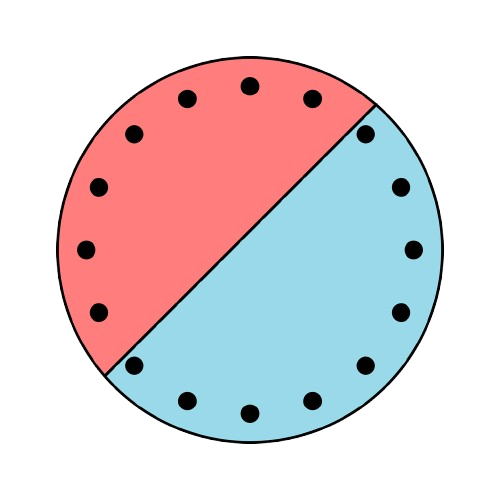


Introduction
Verifying a reinforced concrete section under combined axial force and bending is straightforward when the bending is uniaxial: a single interaction diagram captures the full resistance domain. Under biaxial bending, however, the resistance depends simultaneously on , , and , and no single 2D curve is sufficient. The complete resistance domain becomes a three-dimensional surface in the space.
SectionPro computes this interaction surface for each limit state defined by the user. A load point inside the surface means the section is safe; a point outside means the capacity is exceeded. The surface is displayed in an interactive 3D viewer with rotation, zoom, and pan controls, and can be exported to PDF, Excel, and text formats.
This article demonstrates the interaction surface analysis on two geometries and two normative codes: an octagonal section (Eurocode 2) and an elliptical section (ACI 318), each analyzed at both ULS and SLS.
Computed results
SectionPro reports three categories of results for each interaction surface:
3D resistance domain
Bounding box
Exports
Test scenarios
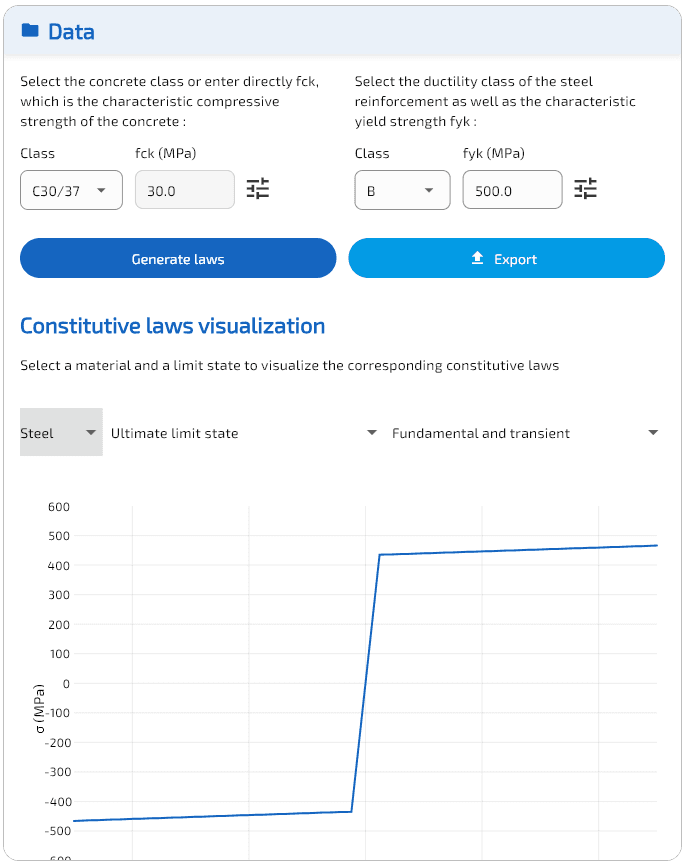
Octagonal section (Eurocode 2). At ULS, the concrete follows a parabola-rectangle law with and the steel is elastoplastic with strain hardening (). At SLS, both materials are linear elastic with user-defined allowable stresses.
Elliptical section (ACI 318). At ULS, the concrete follows the Whitney equivalent rectangular stress block. The section resistance is reduced by -factors that depend on the strain state ( to ), with an additional cap on the maximum compressive force. For reinforcement ratios below 1%, an architectural reduction further scales the block stress. At SLS, both materials are linear elastic with user-defined allowable stresses.
Octagonal section (Eurocode 2)
Input data
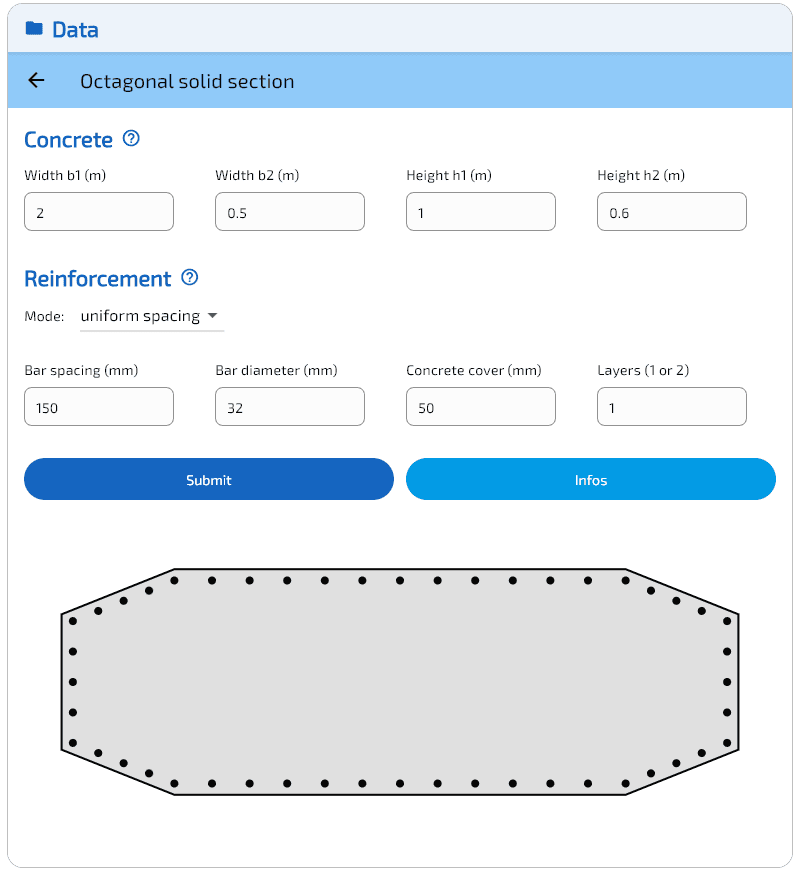
- Concrete — Octagonal cross section, m, m, m, m.
- Reinforcement — 48 bars, uniform spacing 150 mm, diameter mm, cover 50 mm, 1 layer.
- Material laws (EC2) — Concrete C30/37: MPa, Steel B500B: MPa.
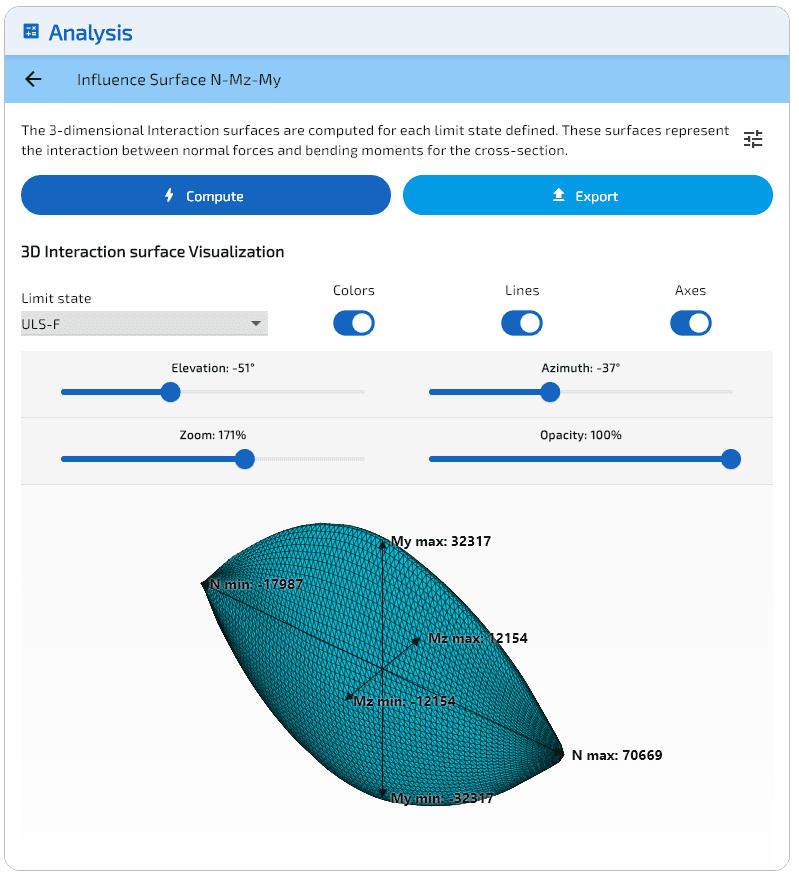
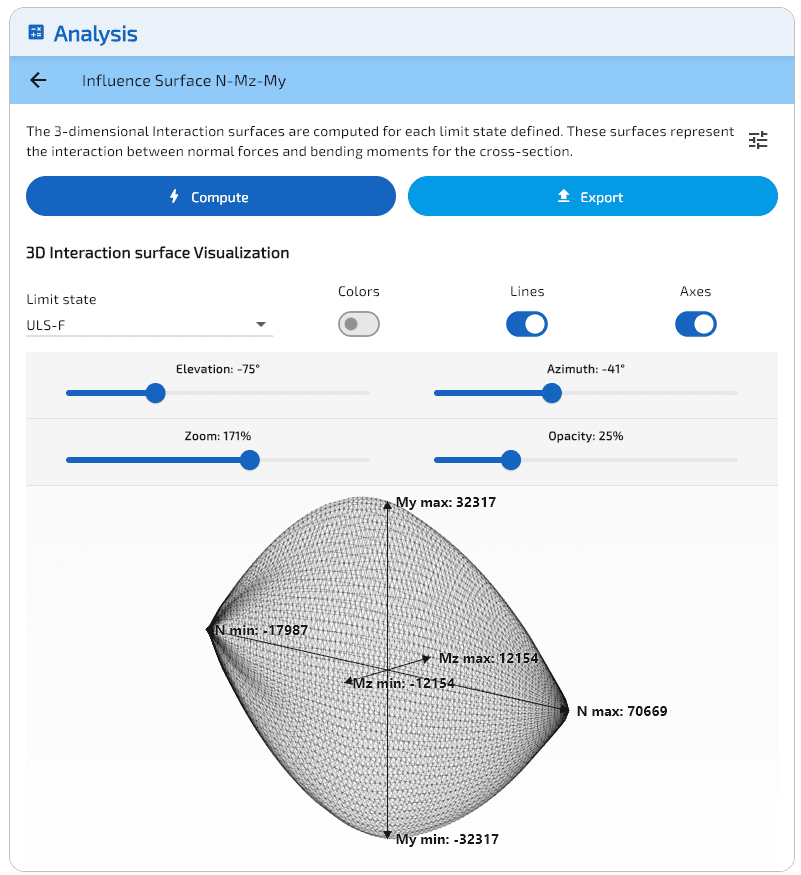
ULS (Fundamental)
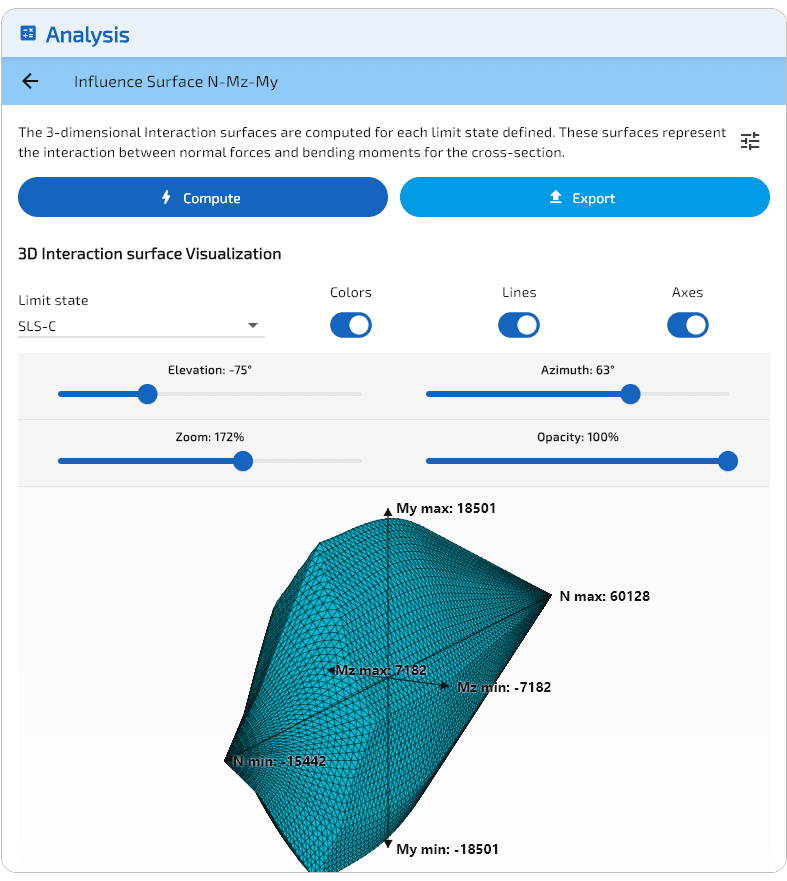
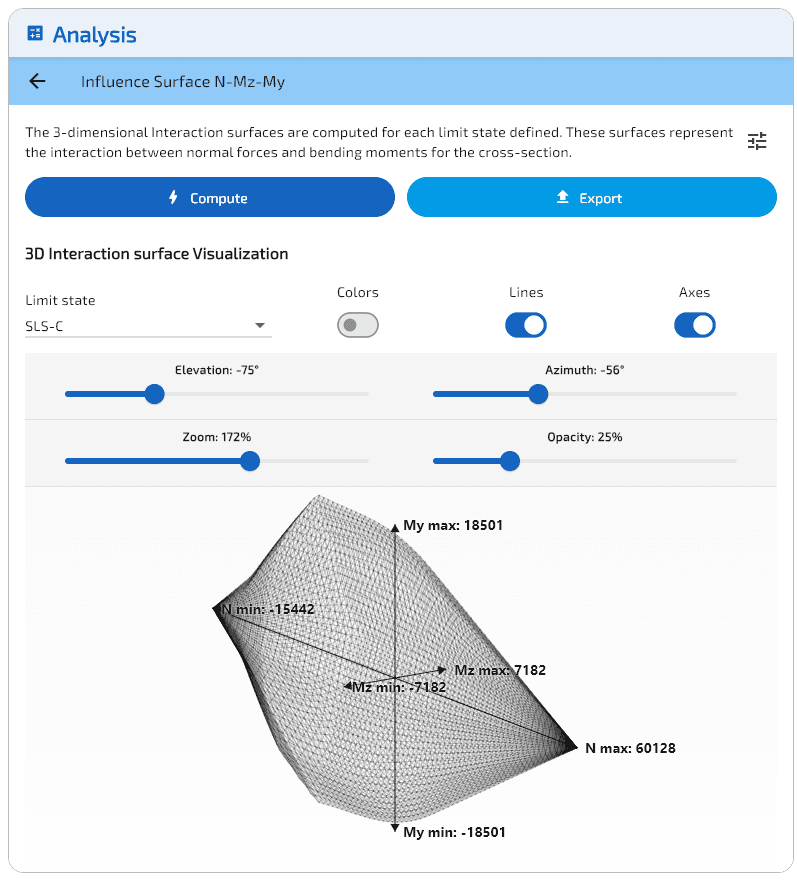
SLS (Characteristic)
Bounding box
| Axial force (kN) | Moment (kN\cdotm) | Moment (kN\cdotm) | |
|---|---|---|---|
| ULS min | |||
| ULS max | |||
| SLS min | |||
| SLS max |
The section is wider than it is tall ( m, m), so extents are significantly larger than : the strong axis is the vertical one (transverse bending). The ULS surface is larger than the SLS surface in all directions, since the nonlinear EC2 parabola-rectangle law with provides greater capacity than the linear elastic SLS law.
Elliptical section (ACI 318)
Input data
- Concrete — Elliptical cross section, width m (strong axis), height m (weak axis).
- Reinforcement — 40 bars along the perimeter, diameter mm, cover 50 mm, 1 layer.
- Material laws (ACI 318) — Concrete: MPa, Steel: MPa.
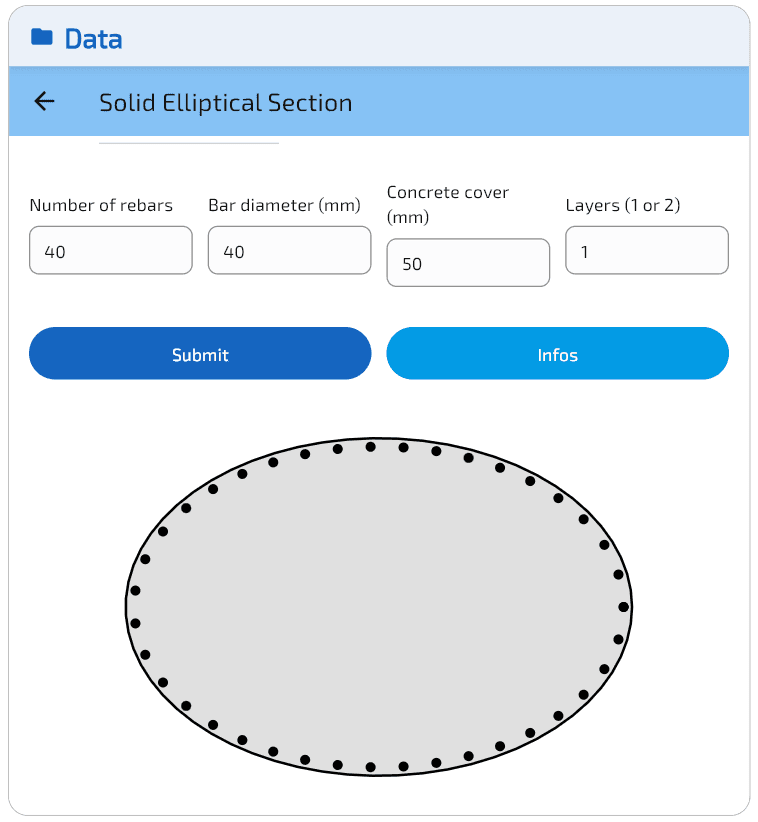
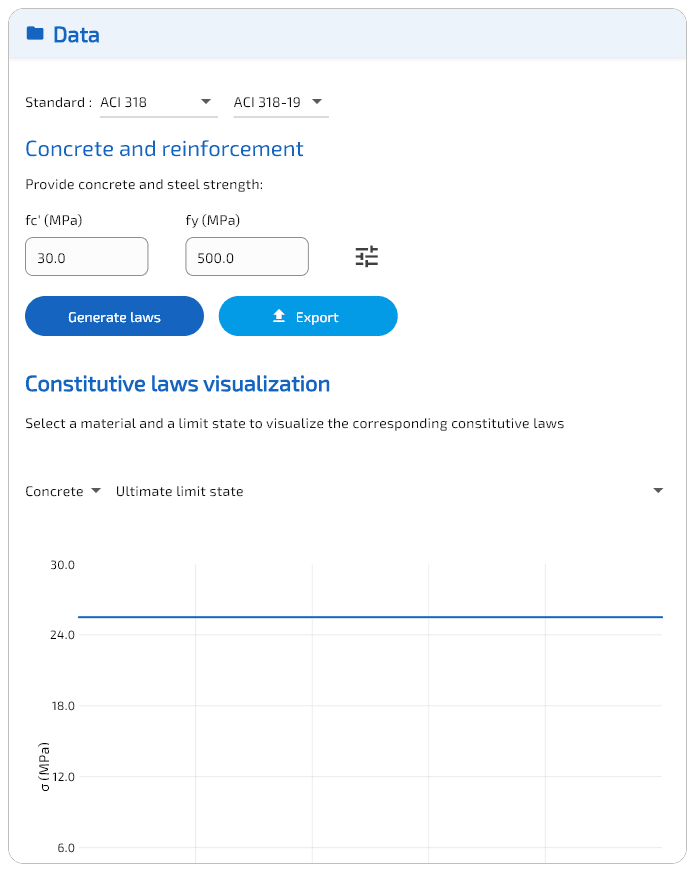
At ULS, the concrete stress distribution is replaced by the Whitney equivalent rectangular block, where relates the block depth to the neutral axis depth. The raw interaction surface is then weighted by -factors that depend on the strain state at each point: for tension-controlled sections and for compression-controlled sections, with a cap on the maximum axial compression. Since the reinforcement ratio () exceeds the 1% architectural threshold, no further reduction is applied to the concrete block stress.
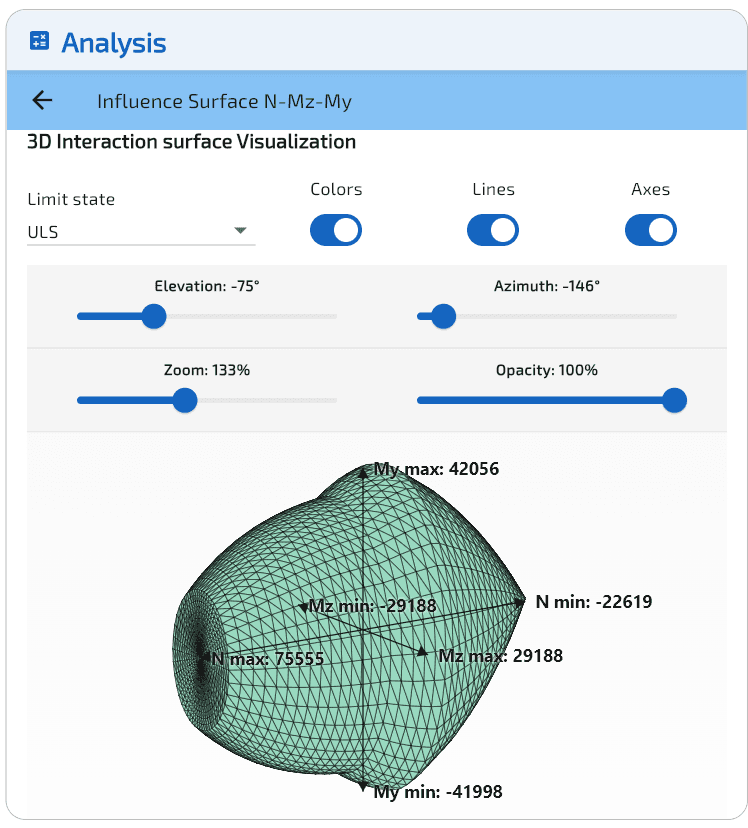
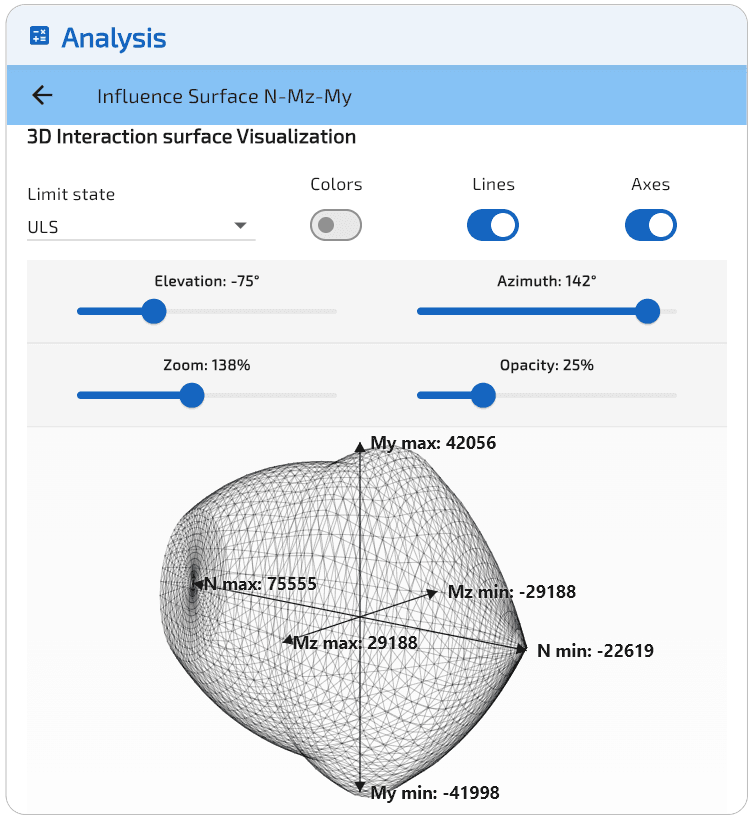
ULS
SLS
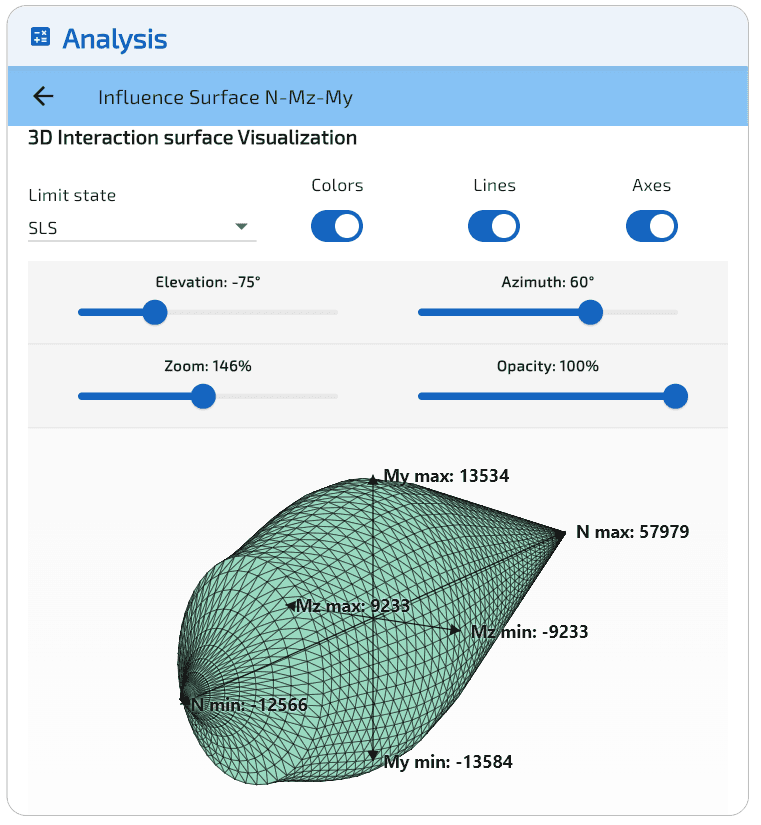
At SLS, the Whitney block and -factors no longer apply. Both concrete and steel follow linear elastic laws, limited by user-defined allowable stresses ( MPa, MPa). The low allowable concrete stress compared to the ULS block stress ( MPa) explains the smaller SLS surface.
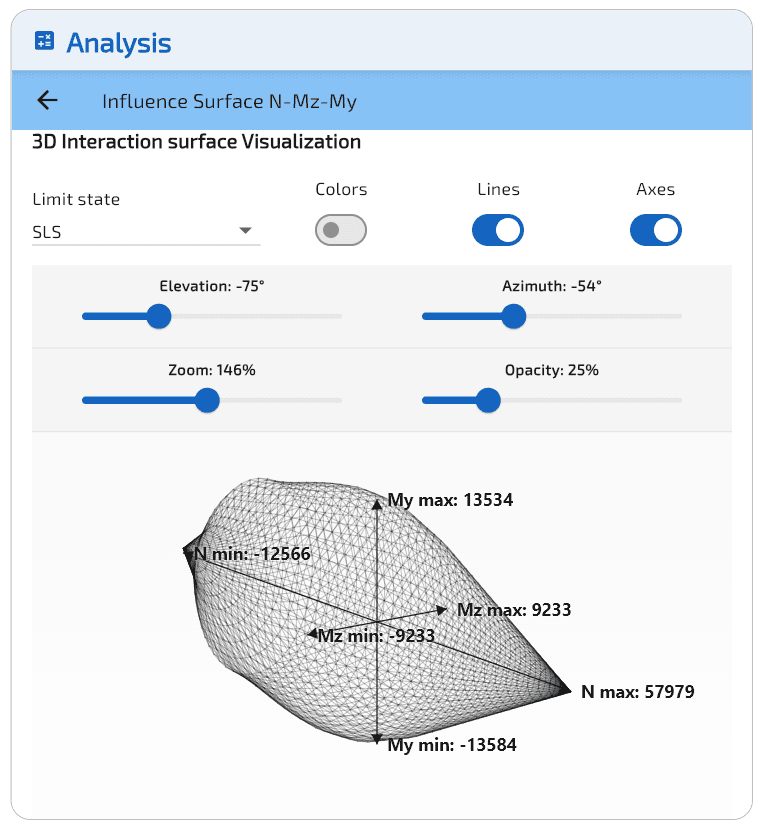
Bounding box
| Axial force (kN) | Moment (kN\cdotm) | Moment (kN\cdotm) | |
|---|---|---|---|
| ULS min | |||
| ULS max | |||
| SLS min | |||
| SLS max |
The section is wider than it is tall ( m), so extents are larger than , but the difference is less pronounced than for the octagonal section and the surface retains a fairly round shape due to the smooth elliptical geometry. The ULS surface is larger than the SLS surface in compression, as expected. The ACI -factors ( for compression-controlled, ) reduce the nominal capacity by an effective factor of , and with the full Whitney block stress ( MPa) is mobilized. At SLS, the concrete is limited to the allowable stress ( MPa), resulting in a smaller compressive capacity.
Export
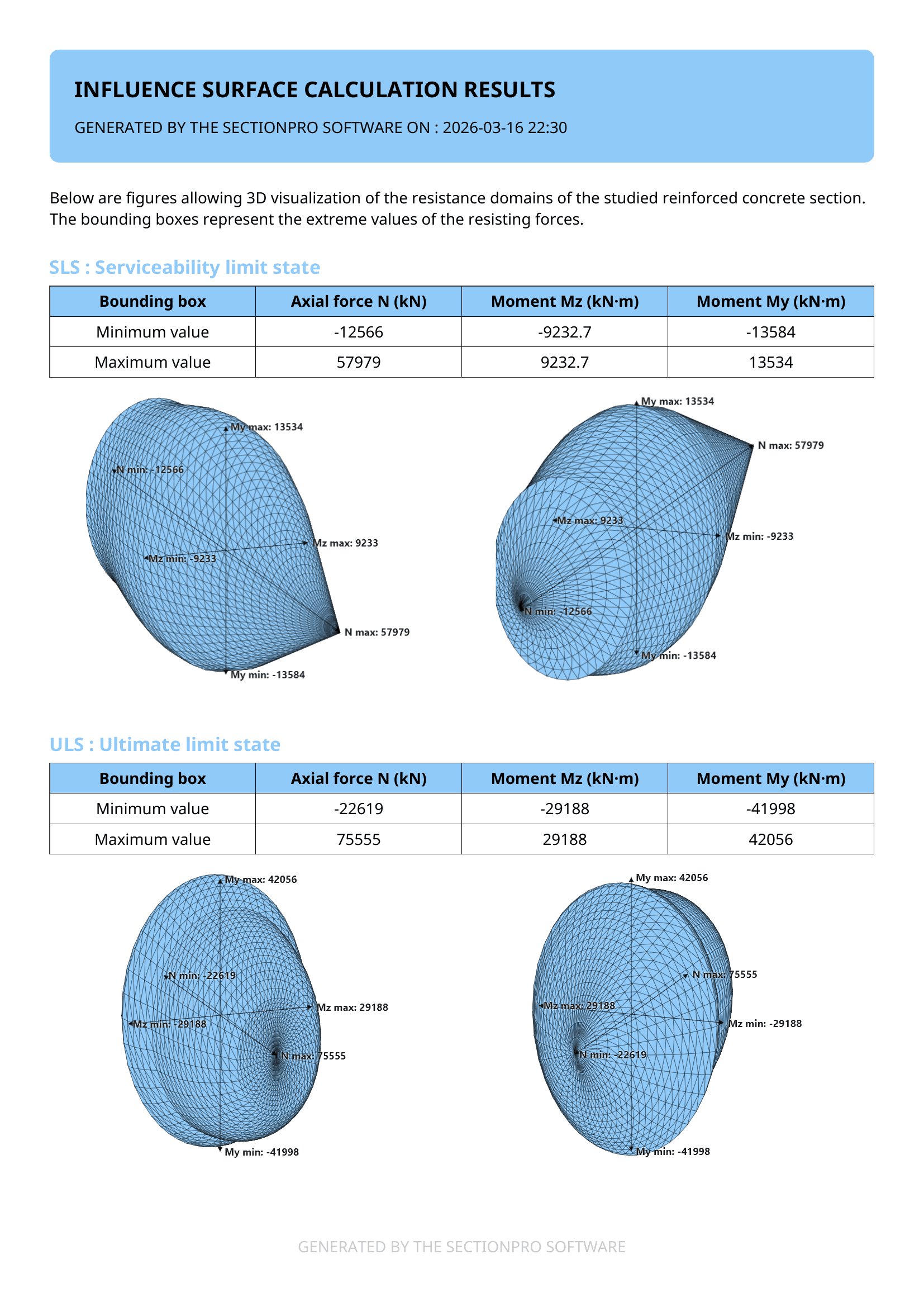
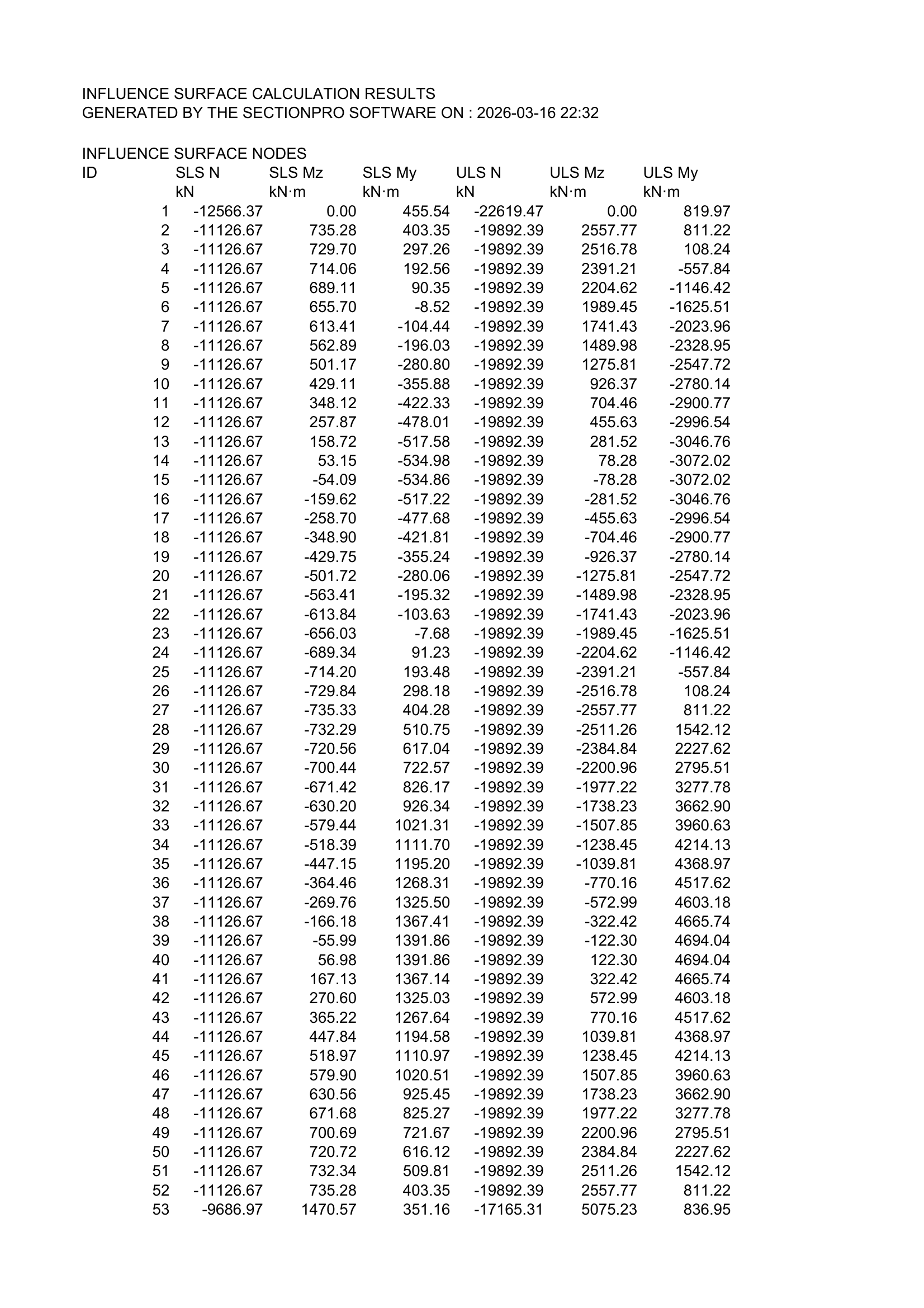
SectionPro exports the interaction surface data in three formats. The export dialog allows selecting which limit states to include. The PDF report contains the bounding box table and two 3D views of the surface from different angles. The Excel file provides two sheets per limit state: one with the mesh node coordinates and one with the triangle connectivity, so the surface can be reconstructed in any external tool. A text export is also available, listing the node coordinates in fixed-width columns.
Performance
The interaction surface computation is instantaneous in practice. The table below shows pure computation times (excluding GUI rendering) measured on a desktop PC for the two sections in this article, at three mesh resolutions (, , and ).
| Section | Coarse (1.2k tri) | Medium (4.9k tri) | Fine (19.8k tri) |
|---|---|---|---|
| Octagonal -- EC2 | 7 ms | 17 ms | 24 ms |
| Elliptical -- ACI 318 | 7 ms | 6 ms | 10 ms |
Eurocode 2 defines five limit states (ULS fundamental, ULS accidental, SLS characteristic, frequent, and quasi-permanent), each with its own material laws and admissible stresses, so the kernel produces five surfaces in a single call. ACI 318 uses two limit states (ULS and SLS), computed in two separate calls. All surfaces compute in under 25 ms even at the finest resolution.
Conclusion
The interaction surface provides a complete view of the resistance domain of a reinforced concrete section under biaxial bending. Rather than checking load points one at a time, the engineer can visualize the full capacity envelope and immediately assess whether a set of load combinations falls inside or outside the domain. This is exactly what the resistance verification module of SectionPro does: it projects each load combination onto the interaction surface and returns the safety margin, which will be the subject of the next article.
The two examples in this article illustrate how the geometry and the normative code shape the resistance domain. The octagonal section under Eurocode 2 and the elliptical section under ACI 318 both produce well-resolved 3D surfaces at interactive speed. The export formats (PDF, Excel, text) provide the data needed for calculation reports or external post-processing.